









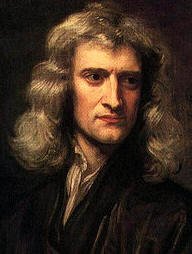
Sir Isaac Newton
1642 - 1727
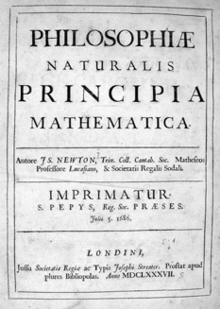
Major Contribution: The Principia, along with other writings-discoveries which laid the foundation for physics until the 20th century.
Statue and Summary of Accomplishments
|
Newton showed that the motions of objects on
Earth and of
celestial
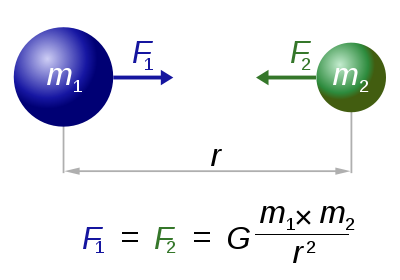
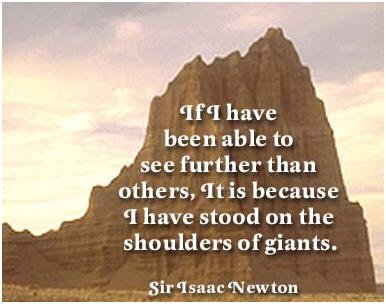
bodies are governed by the same set of natural laws. He did this by demonstrating the consistency between Kepler's laws of planetary motion and his theory of gravitation. In doing so, he removed the last doubts about heliocentrism. In his "I stand on the shoulders of giants" commentary, he gave special credit to Galileo, |
||
 |
 |
 |
|
Essential to his laws is the concept
of an "Inertial Reference Frame." Newton is generally recognized as being one of the most influential scientists of all time. |
||