Johannes Kepler: 1571-1630
![]() |
Johannes Kepler was a German mathematician, astronomer and astrologer, and key figure in the 17th century Scientific revolution.
He is best known for his
laws of planetary motion, codified by later astronomers
based on his works
Astronomia nova,
Harmonices Mundi, and Epitome of Copernican
Astrononomy. They also provided one of the foundations for
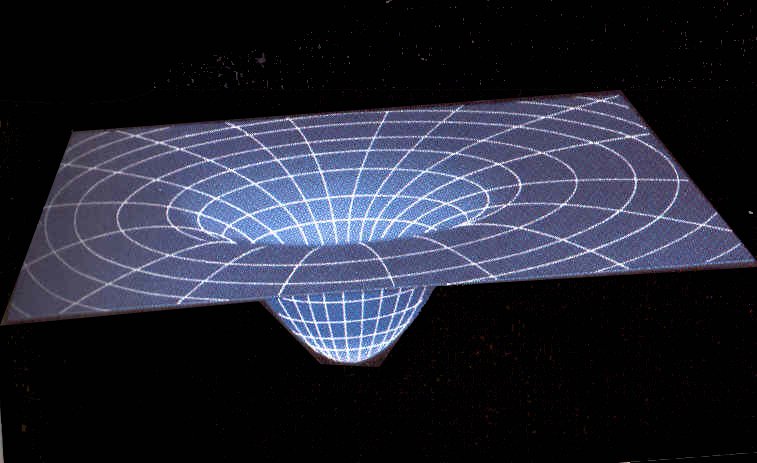
Isaac Newton's theory of
universal gravitation.
During his career, Kepler was a mathematics teacher at a seminary
school in
Graz,
Austria, an assistant to astronomer
Tycho Brahe, the court mathematician to
Emperor Rudolf II, a mathematics teacher in
Linz,
Austria, and an adviser to
General Wallenstein. He also did fundamental work in the
field of
optics, invented an improved version of the
refracting telescope (the
Keplerian Telescope), and helped to legitimize the
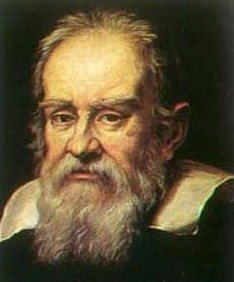
telescopic discoveries of his contemporary
Galileo Galilei. Kepler lived in an era when there was no clear distinction between astronomy and astrology, but there was a strong division between astronomy (a branch of mathematics within the liberal arts) and physics (a branch of natural philosophy). Kepler also incorporated religious arguments and reasoning into his work, motivated by the religious conviction that God had created the world according to an intelligible plan that is accessible through the natural light of reason.
Kepler described his new astronomy as "celestial physics", as "an
excursion into
Aristotle's
Metaphysics", and as a supplement to Aristotle's
On the Heavens transforming the ancient tradition of
physical cosmology by treating astronomy as part of a universal
mathematical physics. |