Computer Science Quotations
Grace Murray Hopper: Wrote First Compiler
Life was simple before World War II. After that, we had systems.
In pioneer days they used oxen for heavy pulling, and when one ox couldn't budge a log, they got more oxen. They shouldn't be trying
for bigger computers, but for more systems of computers.
Humans are allergic to change. They love to say, "We've always done it that way." I try to fight that. That's why I have a clock on my
wall that runs counterclockwise.
Humans must turn information into intelligence or knowledge. We've tended to forget that no computer will ever ask a question.
You manage things, you lead people. We went overboard on management and forgot about leadership. It might help if we ran the MBAs
out of Washington.
In mathematics, you don't understand things. You just get used to them.
The most vitally characteristic fact about mathematics is, in my opinion, its quite peculiar relationship to the natural sciences, or more
generally, to any science which interprets experience on a higher than purely descriptive level.
Anyone who considers arithmetic methods of producing random digits is, of course, in a state of sin.
There is an infinite set A that is not too big.
All stable process we shall predict. All unstable processes we shall control.
The sciences do not try to explain, they hardly even try to interpret, they mainly make models. By a model is meant a mathematical
construct which, with the addition of certain verbal interpretations, describes observed phenomena. The justification of such a
mathematical construct is solely and precisely that it is expected to work.
Ada Lovelace or Augusta Byron or Lada Ada or Countess of Lovelace: Wrote First Program
The Analytical Engine weaves algebraic patterns, just as the Jacquard loom weaves flowers and leaves.
The Analytical Engine has no pretensions whatever to originate anything. It can
do whatever
we know how to order it to perform. It can follow
analysis, but it has no power of anticipating any analytical revelations or truths. Its province is to assist us in making available what we are already
acquainted with.
In almost every computation a great variety of arrangements for the succession of the processes is possible, and various considerations must influence
the selections amongst them for the purposes of a calculating engine. One essential object is to choose that arrangement which shall tend to reduce to
a minimum the time necessary for completing the calculation.
Many persons who are not conversant with mathematical studies imagine that because the business of [Babbage's Analytical Engine] is to give its
results in numerical notation, the nature of its processes must consequently be arithmetical and numerical, rather than algebraical and analytical. This is
an error. The engine can arrange and combine its numerical quantities exactly as if they were letters or any other general symbols; and in fact it might
bring out its results in algebraical notation, were provisions made accordingly.
Bjarne Stroustrup: Primary Developer of C++ Language
C makes it easy to shoot yourself in the foot. C++ makes it harder, but when you do, it blows away your whole leg.
There are only two kinds of languages - those that nobody uses and those that everybody complains about.
George Boole: Pioneer in Field of Logic
No matter how correct a mathematical theorem may appear to be, one ought never to be satisfied that there was not something imperfect
about it until it also gives the impression of being beautiful.
One of the many forms of false culture, a premature converse with abstractions is perhaps the most likely to prove fatal to the growth of a
vigor of intellect.
It is not of the essence of mathematics to be conversant with the ideas of number and quantity.
Charles Babbage: Developed first Computer
On two occasions I have been asked by members of Parliament "Pray, Mr. Babbage, if you put into the machine wrong figures, will the right answers come out?" I am not able rightly to apprehend the kind of confusion of ideas that could provoke such a question.
The drawings of the Analytical Engine have been made entirely at my own cost: I instituted a long series of experiments for the purpose of
reducing the expense of its construction to limits which might be within the means I could myself afford to supply. I am now resigned to the necessity of abstaining from its construction.
Alan Turing: Father of Computer Science
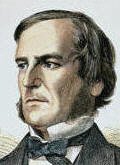
A computer would deserve to be called intelligent if it could deceive a human into believing that it was human.
No, I'm not interested in developing a powerful brain. All I'm after is just a mediocre brain, something like the President of the American Telephone and Telegraph Company.
Mathematical reasoning may be regarded rather schematically as the exercise of a combination of two facilities, which we may call intuition and ingenuity.
I believe that at the end of the century the use of words and general educated opinion will have altered so much that one will be able to speak of machines thinking without expecting to be contradicted.
Machines take me by surprise with great frequency.
John Kemeny: Developer of the BASIC Language
"People would ask -- did you know enough physics to help Einstein? My standard line was: Einstein did not need help in physics. But contrary to popular belief, Einstein did need help in mathematics. By which I do not mean that he wasn't good at mathematics.
He was very good at it, but he was not an up-to-date research level mathematician. His assistants were mathematicians for two reasons. First of all, in just ordinary calculations, anybody makes mistakes.
There were many long calculations, deriving one formula from another to solve a differential equation. They go on forever. Any number of times we got the wrong answer. Sometimes one of us got the wrong answer, sometimes the other. The calculations were long enough that if you got the same answer at the end, you were confident. So he needed an assistant for that, and, frankly, I was more up-to-date in mathematics than he was."
C.A.R. Hoare: Developer of Quick Sort
There are two ways of constructing a software design.
One way is to make it so simple that there are obviously no deficiencies. And the other way is to make it so complicated that there are no obvious deficiencies.